


AI Personalization for Treatment Adherence
Key Takeaways
Medication non-adherence is a major healthcare challenge, costing the U.S. an estimated $500 billion annually and contributing to 125,000 preventable deaths each year. Traditional methods like pamphlets and general reminders often fail because they lack personalization, react too late, and overlook deeper issues like financial struggles or side effect concerns.
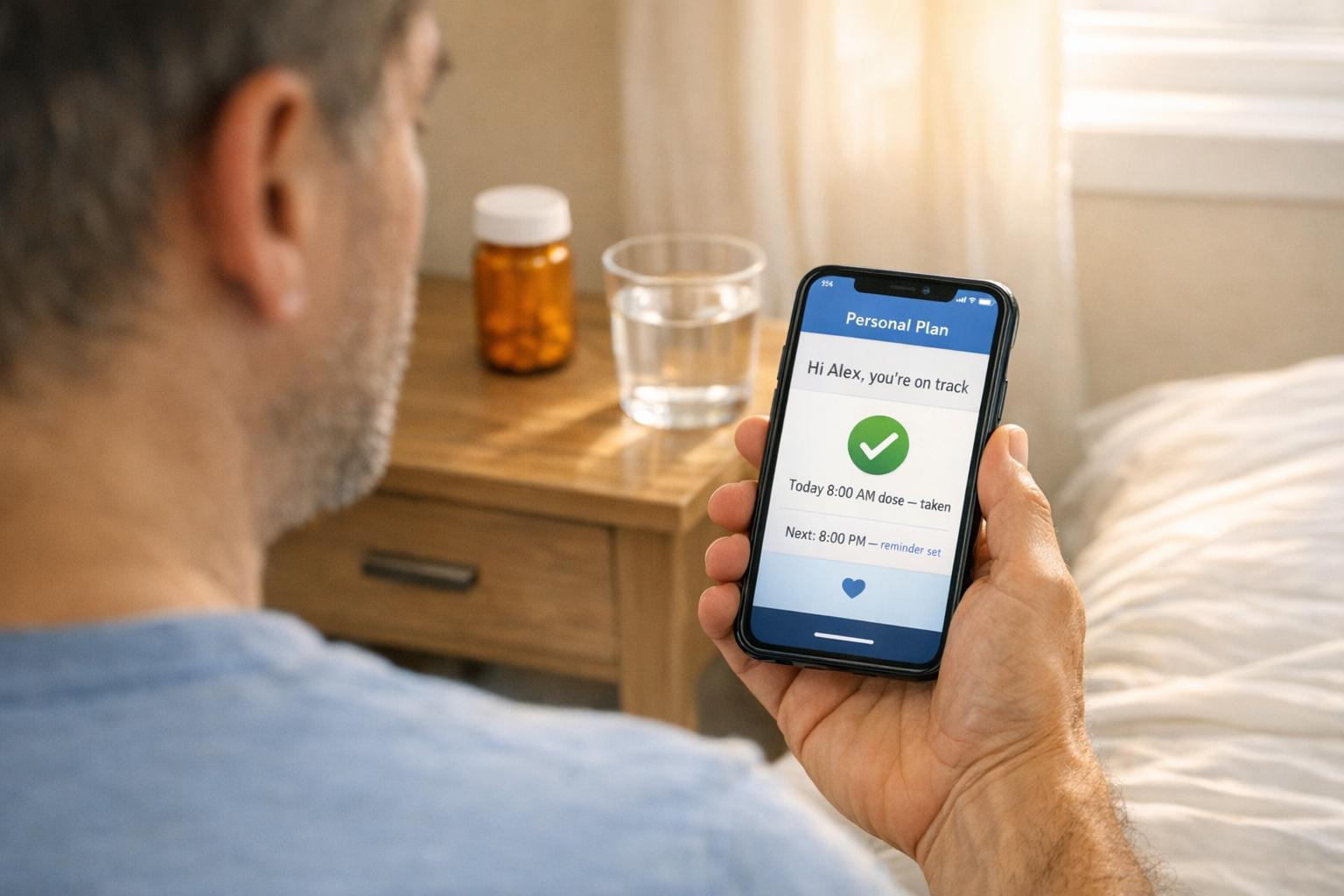
AI-powered systems offer a smarter solution by using real-time data to predict and prevent non-adherence. These systems tailor interventions - such as reminders, educational content, or coaching - based on individual patient behaviors and preferences. Recent results show AI can improve adherence rates by up to 67% in some cases, while also reducing healthcare costs through automation and targeted support.
Key Takeaways:
- Traditional Methods: Generic, reactive, costly, and limited in scale.
- AI Solutions: Predictive, personalized, scalable, and cost-efficient.
- Results: Improved adherence rates, better patient engagement, and reduced long-term expenses.
AI is reshaping patient care by addressing non-adherence proactively and tailoring support to individual needs. While it requires upfront investment, the benefits in outcomes and cost savings are undeniable.
Improving Medication Adherence with AI Solutions w/ AllazoHealth CEO, William Grambley
1. Standard Patient Support Methods
For years, the healthcare industry has leaned on methods like nurse-run call centers, pamphlets sent through the mail, pill organizers, and generic SMS reminders. These approaches were designed to handle large numbers of patients efficiently, but they often lack the personal touch that many patients need. Rishabh Tickoo from Altimetrik summed it up well:
For decades, pharma relied on static strategies: call centers, pamphlets, and blanket reminders. But these approaches often miss the mark.
The problem? These methods don’t address the real-world challenges patients face, such as differences in health literacy, financial hurdles, or psychological barriers that make it hard for them to stick with their treatment plans.
Adherence Rates
Even with these traditional support systems, adherence rates remain stubbornly low. About 50% of patients still don’t take their medications as prescribed, despite reminders and educational efforts. These methods tend to focus on issues like forgetfulness but fail to address deeper challenges, such as financial struggles, doubts about the effectiveness of treatment, or a lack of clear communication from healthcare providers . Worse yet, these systems are often reactive - they step in only after a patient has missed a refill or disengaged entirely. This makes it even harder to re-establish trust and get patients back on track.
Patient Engagement
Traditional systems also struggle to make patients feel valued. Studies show that 35% of patients feel undervalued when interacting with these systems. Many patients now prefer connecting with peers who share similar experiences. Sara W., a Marketing Director in the rare disease field, highlighted this shift:
We knew patient trust was shifting, but seeing just how dramatically patients now prefer peer-to-peer engagement over traditional methods is a game-changer for our upcoming strategies.
This lack of meaningful engagement further complicates efforts to scale these systems effectively.
Scalability
While traditional methods can reach large groups of patients, they come with significant limitations. For example, call centers require a large, well-trained staff to handle patient needs, which can be costly and resource-intensive. Similarly, manual monitoring systems like mDOT are labor-heavy and difficult to expand. When patient numbers increase, these systems often hit bottlenecks, leading to longer wait times and reduced personalization - exactly the opposite of what patients need.
Cost-Effectiveness
At first glance, traditional methods like printed materials or basic SMS reminders may seem low-cost, but they come with hidden expenses. Poor medication adherence tied to these outdated strategies costs the U.S. healthcare system an estimated $500 billion annually in avoidable expenses. Generic outreach efforts waste resources by targeting patients who don’t need help while failing to reach those who do. Without using data to pinpoint patients who require extra support, these programs end up spending more money while achieving less. The result? A system that’s not only inefficient but also unsustainable in the long run.
2. AI-Powered Personalization Methods
AI is reshaping patient support by moving from a reactive approach to a predictive, tailored model. By analyzing patient data and wearables, AI can anticipate non-adherence and initiate customized interventions. This goes beyond simple reminders - it identifies the best intervention type, such as educational content, selects the ideal communication channel (like SMS, voice calls, or app notifications), and determines the most effective timing. Essentially, AI creates and refines thousands of unique patient profiles using reinforcement learning, achieving a level of personalization that manual methods simply can't match. This proactive, data-driven approach marks a clear departure from older, reactive strategies.
Adherence Rates
The impact of AI on adherence rates is significant. For example, in May 2025, Walgreens reported that its AI-driven personalization program boosted medication adherence by 9.7% for statin users, 8.6% for diabetes patients, and 5.5% for those on hypertension medications. These results were achieved by dividing patients into thousands of micro-segments to find the most effective outreach method - whether through texts, calls, or digital notifications. Another standout example comes from a 12-week randomized trial using an AI-powered smartphone app with computer vision to monitor stroke patients on anticoagulant therapy. The intervention group achieved 100% adherence, compared to just 50% in the control group - a striking 67% absolute improvement. These examples highlight how AI is transforming medication adherence strategies.
Patient Engagement
AI-powered tools like chatbots and conversational interfaces provide 24/7 support, something traditional call centers can't achieve efficiently. In 2025, GSK tested an AI-driven respiratory chatbot for asthma and COPD patients, offering continuous coaching on inhaler techniques and symptom management. This chatbot used natural language processing to assess patient sentiment, enhancing its effectiveness. Similarly, the "Vik" chatbot for breast cancer patients sent tailored text messages with medical information and treatment reminders, leading to over a 20% improvement in compliance. As Rishabh Tickoo from Altimetrik aptly stated:
The era of mass messaging is over. The goal isn't just to automate - it's to elevate the patient experience.
Scalability
AI systems excel at scalability, handling countless simultaneous queries without the bottlenecks that plague traditional call centers. For instance, in May 2025, Novartis joined forces with Microsoft to create an AI lab focused on analyzing real-world data to predict therapy drop-offs. This collaboration enabled early, automated interventions for large patient groups. Cloud-based infrastructures further simplify scaling, eliminating the need for expensive on-site hardware. Moreover, AI adapts to individual behaviors - if a patient ignores texts but responds to calls, the system automatically shifts its outreach strategy to prioritize voice communication.
Cost-Effectiveness
AI doesn't just improve adherence; it also reduces costs through automation. A review of 21 studies found that 62% of AI interventions were cost-efficient and often outperformed traditional methods. By automating routine tasks like appointment scheduling, patient admissions, and co-payment processing, AI frees up clinicians to focus on more complex cases. Predictive analytics also identify patients who need extra support, helping to avoid costly hospital admissions and emergency visits. These targeted approaches address the inefficiencies of traditional systems, marking a significant advancement in patient care.
sbb-itb-8f61039
Advantages and Disadvantages

Traditional vs AI-Powered Patient Support Methods Comparison
Traditional methods and AI-powered systems for patient support each come with their own set of trade-offs. Traditional approaches - like pamphlets, call centers, or similar tools - are familiar and require little upfront investment in technology. But they often struggle to keep up with demand. Scaling these methods typically means hiring more staff, which directly increases costs. On top of that, their generic, one-size-fits-all nature can lead to "alert fatigue", where patients feel overlooked or undervalued by their healthcare providers.
In contrast, AI-powered systems address many of these issues by offering proactive, personalized support. They use tools like predictive analytics and micro-segmentation to identify patients at risk of missing doses before it happens. These systems then provide tailored interventions, whether through text messages, phone calls, or app notifications. Unlike traditional models, AI-powered approaches can scale exponentially. Cloud-based platforms can handle thousands of patients simultaneously, providing round-the-clock support without overburdening human staff. For example, in a study involving 33,344 Medicare patients, AI-driven methods boosted medication adherence by 7.8% compared to traditional approaches. Moreover, 62% of AI interventions have been shown to cut costs by preventing avoidable hospitalizations, reducing long-term healthcare expenses.
Here's a quick comparison of the two approaches:
| Feature | Traditional Patient Support Methods | AI-Powered Personalization Methods |
|---|---|---|
| Adherence Rates | Typically lower; 50% of patients remain non-adherent | Increased by 6.7% to 32.7% compared to standard care |
| Patient Engagement | Generic and static, often causing alert fatigue | Tailored and predictive, adapting to individual behaviors |
| Scalability | Limited by the need for additional staff | Scales easily with 24/7, cloud-based support |
| Cost-Effectiveness | Higher long-term costs due to preventable hospitalizations | Requires upfront investment but lowers long-term expenses |
| Intervention Style | Reactive - addresses issues after non-adherence occurs | Proactive - prevents non-adherence before it happens |
That said, AI systems aren't without challenges. They demand significant upfront investments in infrastructure, such as integrating Electronic Health Records (EHR) and ensuring HIPAA-compliant data security. These requirements can be daunting for smaller practices or rural healthcare providers, making traditional methods a more practical choice in such cases.
Ultimately, the decision between the two approaches depends on the resources available and the needs of the patient population. AI shines when it comes to scale and personalized care, while traditional methods remain a reliable option for smaller, less tech-savvy settings. Each approach has its place, and the best choice will vary based on the organization's circumstances.
Conclusion
AI-powered personalization is reshaping how we approach treatment adherence. Traditional methods like pamphlets and call centers might feel familiar, but they can't compete with the predictive accuracy and scalability that AI systems bring. The transition from reactive care - addressing issues after they occur - to proactive care, where algorithms anticipate non-adherence before it happens, marks a significant step forward in patient support.
For healthcare providers considering AI solutions, there are three key priorities to keep in mind:
- System integration: Look for platforms that align with existing systems, leveraging FHIR standards to enable real-time data exchange between Electronic Health Records and pharmacy systems.
- Advanced learning capabilities: Opt for solutions that use reinforcement learning instead of rigid rule-based logic. This allows the system to adapt to each patient’s evolving habits and preferences over time.
- Data security and ethics: Ensure the platform complies with HIPAA regulations and incorporates ethical AI practices to safeguard sensitive patient data and prevent algorithmic bias.
These considerations highlight the advantages of AI methods over traditional approaches.
The stakes are high. Medication non-adherence costs the U.S. an estimated $500 billion annually and contributes to 125,000 preventable deaths each year. AI-driven platforms have already demonstrated measurable improvements in adherence compared to standard methods.
Pharmaceutical and med-tech companies can leverage tools like PatientPartner, which combines AI-driven personalization with real-time mentorship. This approach addresses the limitations of traditional support - such as limited scalability, generic communication, and delayed interventions - while preserving the human connection that patients value.
The future of treatment adherence lies in blending technology with human care. As physician Michelle Thompson puts it:
AI enables me to focus entirely on patient care.
This integrated model allows AI to manage routine monitoring and personalization at scale, freeing healthcare professionals to dedicate their time to complex cases that require a human touch. It’s a partnership between technology and expertise that holds immense promise for improving patient outcomes.
FAQs
How does AI predict non-adherence before it happens?
AI leverages machine-learning models to sift through patient data, spotting risk factors and patterns that might indicate potential non-compliance. By identifying these issues early, healthcare providers can step in with targeted interventions, helping patients stay on track and improving overall outcomes.
What patient data do these systems need to personalize outreach?
To make these systems work effectively, they rely on a mix of patient information, including demographic details, medical history, medication habits, and even behavioral data like how often a patient engages with an app. Real-time insights into clinical and behavioral patterns are also crucial. Together, this data helps create personalized outreach and support that truly matches what each patient needs.
How do providers ensure AI adherence programs are HIPAA-compliant?
Providers make sure AI adherence programs align with HIPAA regulations by utilizing secure systems that meet stringent data privacy requirements. This involves establishing legal agreements, ensuring clear communication about data use, and incorporating oversight by trained professionals. They also depend on AI platforms designed specifically for HIPAA compliance, helping to protect patient data while supporting adherence initiatives efficiently.
Related Blog Posts
Author